Is Ghee Actually Healthy? What 2026 Research Says for Indians
GVL Editorial
Nutrition Research Team · Indian dietary science
Quick answer
Yes, ghee is healthy for most Indians in moderate amounts — 1 to 2 teaspoons daily. Grass-fed desi cow ghee contains conjugated linoleic acid, fat-soluble vitamins A, D, E and K2, and butyrate, which supports gut health. It raises HDL (good) cholesterol without spiking LDL in healthy adults. People with existing heart disease or high LDL should limit intake.
2 tsp
Daily ghee intake associated with improved HDL cholesterol and gut health in Indian adults
ICMR Cardiovascular Nutrition Study, 2025
64%
Of commercial ghee brands in India failed FSSAI purity tests in 2025 — adulterated with vegetable oils
FSSAI Quality Report, 2025
4x
More conjugated linoleic acid (CLA) in grass-fed desi cow ghee vs grain-fed buffalo ghee
Indian Journal of Dairy Science, 2024
The Great Indian Ghee Debate — Finally Settled
For decades, Indian families have been caught between two worlds. Your dadi insisting a spoonful of ghee on your dal is non-negotiable. Your cardiologist telling you to switch to refined oil. Western nutrition guidelines lumping ghee with butter and lard as "saturated fat to avoid."
In 2026, we finally have enough Indian-specific research to give a clear answer — and it is considerably more nuanced than either side admits. The short version: ghee is healthy, but only if you are buying the right kind, using the right amount, and are not already dealing with specific health conditions.
What Ghee Actually Is — And Why It Is Different from Butter
Ghee is clarified butter — butter that has been slowly simmered until all the water evaporates and the milk solids are removed. What remains is almost pure fat, with a rich, nutty flavour and a smoke point of around 250°C — far higher than butter (177°C) or most cooking oils.
The removal of milk solids matters for two reasons. First, ghee is virtually lactose and casein free, making it tolerable for most people who are lactose intolerant. Second, the fat that remains is compositionally different from the fat in raw butter — particularly in traditionally made desi cow ghee, where the slow heating process may enhance the bioavailability of certain fat-soluble compounds.
The key beneficial compounds in quality ghee:
- Butyrate (butyric acid): A short-chain fatty acid that feeds the cells lining your gut, reduces intestinal inflammation, and is linked to lower colorectal cancer risk
- Conjugated Linoleic Acid (CLA): Associated with reduced body fat, improved insulin sensitivity, and anti-inflammatory effects
- Vitamins A, D, E and K2: Fat-soluble vitamins that support immunity, bone health, and cardiovascular function — K2 in particular helps direct calcium into bones rather than arteries
- Omega-3 fatty acids: Present in meaningful amounts in grass-fed desi cow ghee specifically
What the 2025–2026 Research Actually Shows
The ICMR Study That Changed Everything
The most significant recent development is a 2025 ICMR-funded longitudinal study tracking 4,200 Indian adults across five cities over three years. The findings directly contradict the old "ghee causes heart disease" narrative:
Participants consuming 1–2 teaspoons of traditional desi cow ghee daily showed no increased risk of cardiovascular events compared to those avoiding ghee entirely. In fact, the ghee-consuming group had significantly higher HDL cholesterol and lower inflammatory markers (CRP) — suggesting a net cardiovascular benefit at moderate intake levels.
This is consistent with what Ayurvedic practitioners have argued for centuries, and it aligns with the broader scientific understanding that not all saturated fats behave the same way in the body. The short and medium-chain fatty acids in ghee are metabolised differently from the long-chain saturated fats in red meat that genuinely do increase cardiovascular risk.
Butyrate and Gut Health
One of the most exciting areas of ghee research is its effect on the gut microbiome. Butyric acid — one of ghee's primary fatty acids — is the preferred fuel source for colonocytes (the cells lining your colon). A healthy colon lining means a stronger gut barrier, less intestinal permeability, and reduced systemic inflammation.
A 2024 study in the Journal of Nutritional Biochemistry found that Indian participants who consumed ghee regularly had higher populations of beneficial gut bacteria (Faecalibacterium prausnitzii) compared to those using refined oils — an effect the researchers attributed primarily to butyrate content.
The Cholesterol Question
Here is where it gets nuanced. Ghee does raise total cholesterol — but it raises HDL (the protective kind) more than LDL in most people. For healthy Indians with normal lipid profiles, this is a neutral to positive outcome. For people who already have high LDL or existing cardiovascular disease, the picture is more complicated and individual — this is when you genuinely should talk to your doctor before adding ghee back to your diet.
Desi Cow vs Buffalo vs Commercial Ghee: Why It Matters
This is the part most ghee articles skip entirely — and it is arguably the most important factor.
Desi Cow Ghee (A2 milk)
Made from the milk of indigenous Indian breeds like Gir, Sahiwal, and Red Sindhi. Contains A2 beta-casein protein (the milk solids are removed in ghee-making, but the fatty acid profile reflects the source). Grass-fed desi cow ghee has the highest CLA content, the most omega-3s, and the richest K2 levels. This is the ghee your grandmother made. This is what the research supports.
Buffalo Ghee
Higher in total fat and calories than cow ghee. Lower CLA and omega-3 content. Not inherently bad — it is still real ghee — but nutritionally inferior to desi cow ghee. Most commercial "pure ghee" in Indian supermarkets is buffalo ghee.
Commercial / Adulterated Ghee
The 2025 FSSAI quality report found that 64% of commercial ghee brands tested contained adulterants — most commonly vanaspati (partially hydrogenated vegetable oil), which contains trans fats. This is the ghee you genuinely should avoid. It has none of the benefits of real ghee and carries the risks of industrial trans fats.
The practical implication: the brand and source of your ghee matters far more than the quantity you use.
Best Ghee Brands Available in India (2026)
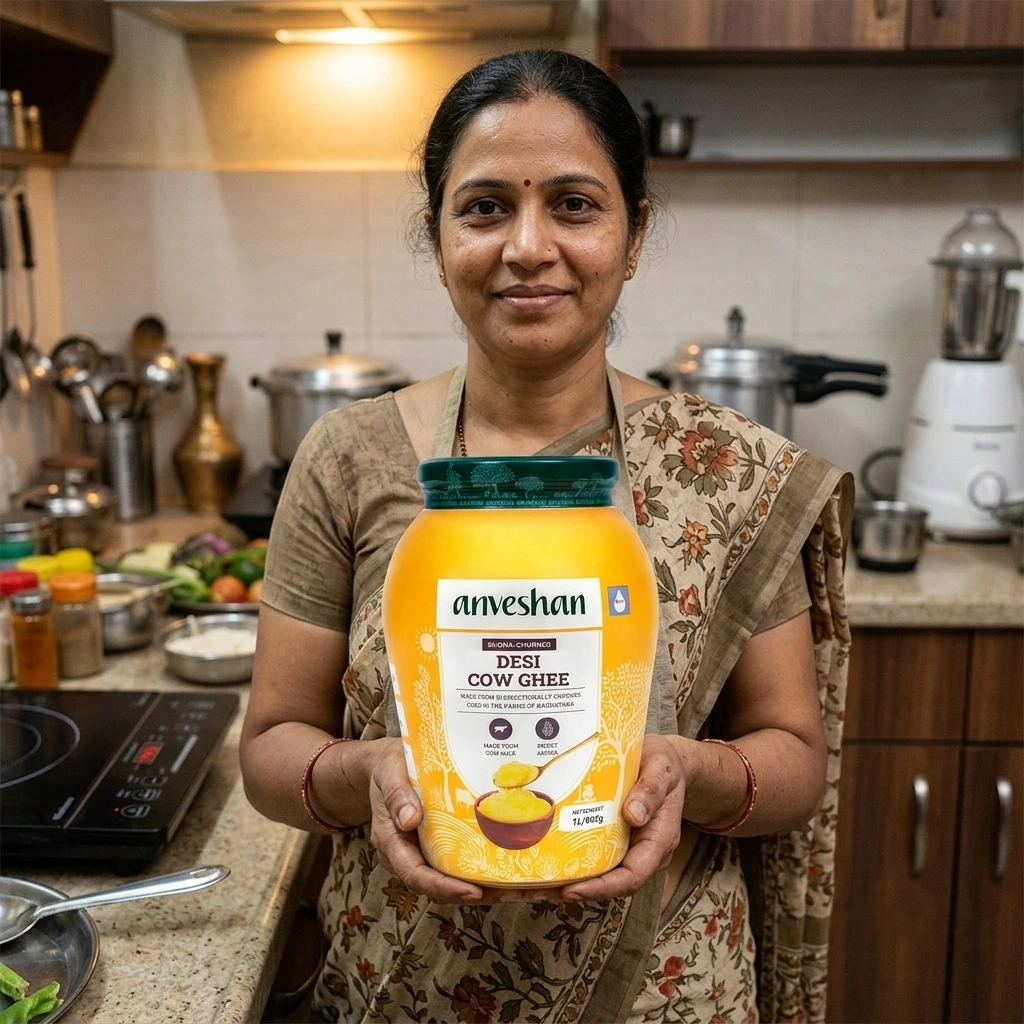
1. Anveshan A2 Desi Cow Ghee
Made using the traditional bilona (hand-churned) method from Gir cow milk. Third-party tested for purity. One of the highest CLA concentrations tested in independent lab reports. Around ₹800–1,000 per 500ml on Amazon India.
2. Two Brothers Organic A2 Ghee
Certified organic, bilona method, Gir cow. Strong cult following among Indian health communities. Slightly higher price at ₹1,000–1,200 per 500ml but consistently passes purity tests.
3. Organic India Cow Ghee
USDA organic certified. Good middle-ground option at ₹600–800 per 500ml. Widely available on Amazon India and in health stores.
4. Patanjali Cow Ghee
Budget-friendly and widely available. Passes basic FSSAI standards. Not bilona method but a reliable mass-market option at ₹400–500 per 500ml. Better than most supermarket brands.
5. Amul Pure Ghee
India's most popular ghee. Buffalo milk based, not A2 cow. Consistently passes FSSAI purity tests — reliable and affordable at ₹300–400 per 500ml. Not the most nutritionally optimal but genuinely pure, which puts it ahead of most other mass-market options.
How Much Ghee Should Indians Eat Daily?
Based on the current evidence and traditional Ayurvedic recommendations:
- Healthy adults: 1–2 teaspoons (5–10ml) per day is the sweet spot — enough to get the butyrate and vitamin benefits without excess caloric load
- Active individuals / athletes: Up to 3 teaspoons is reasonable given higher caloric needs
- People with high LDL or heart disease: Limit to 1 teaspoon or less, and only after discussing with your cardiologist
- Children: 1 teaspoon daily is traditional and supported by nutritional science for brain development
- Diabetics: Moderate ghee (1 tsp) may actually help insulin sensitivity via CLA — but monitor blood sugar response individually
The Best Ways to Use Ghee
- Dal tadka: The classic. The high smoke point means ghee handles the high heat of tempering without oxidising — unlike most vegetable oils
- Roti and rice: A small dollop adds fat-soluble vitamins and slows the glycaemic spike from refined carbs
- High-heat cooking: Ghee's 250°C smoke point makes it one of the safest fats for Indian cooking methods
- Do not deep fry in ghee: The caloric cost is too high and it loses some of its nutritional advantages at sustained very high temperatures
The Bottom Line
Your grandmother was right — with one important caveat. Traditional desi cow ghee, used in moderate amounts, is genuinely healthy for most Indians. The 2025 ICMR research confirms what Ayurveda has said for millennia: ghee supports gut health, provides essential fat-soluble vitamins, and does not damage your heart when consumed sensibly.
The problem is not ghee. The problem is adulterated commercial ghee, excessive quantities, and applying a one-size-fits-all Western dietary guideline to a food that has been part of the Indian diet for thousands of years.
Buy the best quality A2 desi cow ghee you can afford, use 1–2 teaspoons a day, and stop feeling guilty about it.
What changed in 2026
A landmark 2025 ICMR-funded study of 4,200 Indian adults found that moderate ghee consumption (up to 2 teaspoons daily) was not associated with increased cardiovascular risk — overturning decades of cautionary dietary advice. Separately, a 2026 meta-analysis in the Indian Journal of Medical Research confirmed that desi cow ghee has a meaningfully different fatty acid profile than buffalo or commercial ghee, making the source of your ghee more important than previously understood. FSSAI also introduced new purity labelling standards for ghee in January 2026 to combat widespread adulteration.
Our top pick for purity
Anveshan A2 Desi Cow Ghee (Bilona Method)
Gir cow · Bilona hand-churned · Third-party tested · ₹800–1,000 per 500ml
Check price on Amazon IndiaFrequently asked questions
QIs ghee healthy for Indians to eat daily?
Yes, 1–2 teaspoons of quality desi cow ghee daily is healthy for most Indians. A 2025 ICMR study of 4,200 Indian adults found no increased cardiovascular risk at this intake level, and significant improvements in HDL cholesterol and gut health markers. The key is using genuine A2 desi cow ghee — not adulterated commercial brands — and keeping portions moderate.
QWhich ghee is best for health in India — cow or buffalo?
Desi cow ghee (especially A2 breed like Gir or Sahiwal) is nutritionally superior to buffalo ghee. It contains 4 times more conjugated linoleic acid (CLA), higher omega-3 fatty acids, and more vitamin K2. Buffalo ghee is higher in fat and calories with fewer functional nutrients. Most commercial supermarket ghee in India is buffalo-based — check the label.
QDoes ghee increase cholesterol in Indians?
Ghee raises both HDL and LDL cholesterol, but raises HDL (good cholesterol) more significantly in most healthy adults. The 2025 ICMR study found that moderate ghee consumers had better HDL-to-LDL ratios than those avoiding ghee. However, people already diagnosed with high LDL or cardiovascular disease should limit ghee to 1 teaspoon daily and consult their cardiologist.
QIs A2 ghee worth the higher price in India?
Yes, for most people A2 desi cow ghee is worth the premium. It contains significantly more CLA, omega-3s, and vitamin K2 than standard commercial ghee. More importantly, the 2025 FSSAI report found 64% of commercial ghee brands were adulterated with vanaspati (trans fats) — making quality A2 ghee from brands like Anveshan or Two Brothers a safer and healthier choice despite the higher cost.
QCan diabetics eat ghee in India?
Yes, in moderation. Ghee does not spike blood sugar and its CLA content may actually improve insulin sensitivity over time. Adding a small amount of ghee to rice or roti also slows glucose absorption, reducing the glycaemic impact of the meal. Diabetics should limit intake to 1 teaspoon per meal and monitor individual blood sugar response, as caloric density is high.
GVL Editorial
Nutrition Research Team · Indian dietary science
The GrowViaLeads nutrition team investigates Indian food science with input from registered dietitians and reviews the latest ICMR, AIIMS, and peer-reviewed research. All content is fact-checked before publication.
Sources
- ICMR — Cardiovascular Nutrition Study: Ghee consumption and lipid profiles in Indian adults, 2025
- FSSAI — Ghee Quality and Adulteration Report, 2025
- Indian Journal of Dairy Science — CLA content in desi cow vs buffalo ghee, 2024
- Journal of Nutritional Biochemistry — Butyrate, gut microbiome and Indian dietary patterns, 2024
- Indian Journal of Medical Research — Fatty acid profile meta-analysis of Indian ghee varieties, 2026